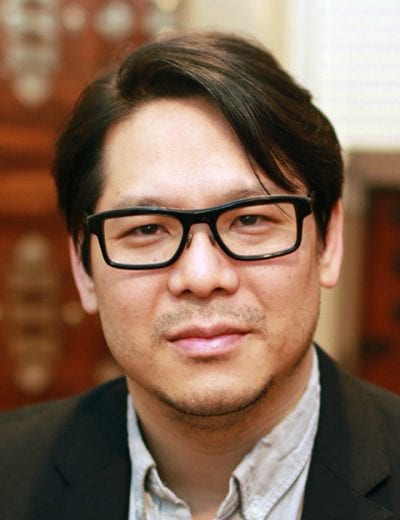
Dr. Yoo’s team is tackling the challenge of revealing how aging in human neurons contributes to the onset of neurodegeneration. Towards this goal, the Yoo lab develops methods to generate human neurons reflecting different ages of individuals by directly converting skin cells to neurons. This method carries over the age information stored in skin cells into the generated neurons, allowing for the dissection of aging as a risk factor in neurodegenerative disorders. The team has demonstrated that these directly reprogrammed neurons can recapitulate neuropathological features and reveal insights into aging as a risk factor driving degeneration of patient-derived neurons. Recently, the team demonstrated that late-onset Alzheimer’s disease (LOAD) patient-derived neurons grown in a three-dimensional environment could indeed recapitulate the neuropathology of Alzheimer’s disease (AD). Leveraging these findings, the ability to compare young and old neurons, especially if derived from the same person, will offer invaluable insights into key age-associated differences within the same genetic background. To this end, the team will experimentally “rejuvenate” AD skin cells and establish AD neuron models representing different cellular ages. They hypothesize that aged and rejuvenated neurons from the same individuals with LOAD (the most common form of AD) or autosomal dominant early-onset AD (the rare inherited form of AD) will provide an effective platform for understanding how brain aging contributes to neurodegeneration.
They have two aims. In Aim 1, they will transiently express transcription factors typically associated with pluripotent stem cells in fibroblasts from aged and AD patients to rejuvenate these cells without changing their cell identity. They will validate rejuvenation by assessing age-related epigenetic signatures and then directly convert these fibroblasts into neurons. Comparing “young” and “old” neurons within the same genetic background will provide insights into how aging contributes to neuronal vulnerability in AD. In Aim 2, they will collaborate with other Brain Aging Consortium investigators to analyze proteomic and lipidomic changes in these neurons and compare them with data from cerebrospinal fluid and brain tissue. These studies will help identify molecular pathways that distinguish healthy brain aging from early AD pathology. The team also plans to leverage insights from the Holstege group’s work on cognitively resilient supercentenarians to explore protective pathways that might slow neuronal aging.