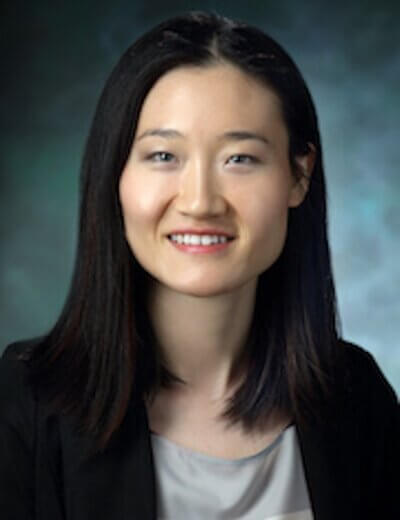
Dr. Zheyu Wang is an Associate Professor in the Division of Quantitative Sciences at the Sidney Kimmel Comprehensive Cancer Center at Johns Hopkins University, with joint appointments in the Department of Biostatistics and the Department of Applied Mathematics & Statistics. She received her Ph.D. in Biostatistics from the University of Washington, one of the nation’s consistently top-ranked biostatistics programs.
Dr. Wang’s research integrates methodological innovation with real-world applications to advance diagnostic accuracy in healthcare, with over a decade of work focused on early and individualized diagnosis and prognosis in Alzheimer’s disease (AD). She is widely recognized for developing statistical methods for diagnostic evaluation when a reliable gold standard is unavailable, incomplete, or error-prone—settings in which conventional approaches can be biased and obscure the value of emerging technologies. Her work includes methods to synthesize multimodal biomarkers, account for imperfect or missing reference standards, address subgroup heterogeneity and assay detection limits, and quantify the incremental value of new biomarkers or risk factors in prediction. These contributions have had broad impact across medicine, particularly in AD, and have earned her recognition as one of the “10 Outstanding Medical School Professors under 40” by Career & Education. She has served as a Principal Investigator on multiple AD-related grants, including an NIH R01 on diagnostic biomarker modeling.
Dr. Wang also leads large-scale efforts to reduce diagnostic error using electronic health record (EHR) data. As the Biostatistics and Data Science Lead for multiple multidisciplinary initiatives, she develops statistical models and automated algorithms within the Symptom–Disease Pair Analysis of Diagnostic Error (SPADE) framework. Originally launched at Johns Hopkins, this program now includes collaborators such as Kaiser Permanente, IBM Watson Health, and the Society to Improve Diagnosis in Medicine, and has produced high-impact publications and media coverage.
In addition, Dr. Wang is committed to promoting infrastructure and appreciation for modern statistical methodologies in diagnosis and prevention. She leads the SKCCC Innovation for Impact 2025 initiative to establish a Cancer Prevention Clinical Data Core and serves as the Biostatistical Core Lead at the Armstrong Institute Center for Diagnostic Excellence, overseeing projects across cancer, cardiovascular disease, infectious diseases, and beyond.
Her long-term goal is to develop and translate quantitative methods that enable earlier diagnosis, more accurate prognosis, and targeted prevention in AD and other complex diseases, ultimately improving patient outcomes and population health.