Late-onset Alzheimer’s disease (LOAD) is the most common form of Alzheimer’s and primarily affects older adults. Aging is the strongest risk factor, yet we still do not understand why neurons become increasingly vulnerable over time to amyloid buildup, tau tangles, and other stressors that drive memory loss and cell death. Progress has been limited by the lack of human neuron models that accurately capture the features of aged, disease-susceptible neurons.
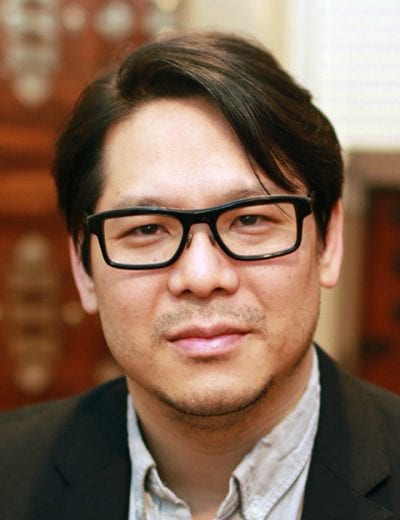
Dr. Yoo’s lab has developed a powerful solution: a method to convert a person’s skin cells directly into neurons using a small set of microRNAs. These miRNA-induced neurons, or miNs, retain the age-related molecular signatures of the donor, so a neuron derived from a 75-year-old behaves like a 75-year-old neuron. With prior CureAlz support, Dr. Yoo demonstrated that when grown in three-dimensional culture systems that mimic brain tissue, these neurons reproduce key hallmarks of Alzheimer’s, including amyloid deposits, tau pathology, damaged neuronal wiring, and cell death. They also revealed differences in epigenetic marks between neurons from patients and healthy controls. By preserving both aging and patient-specific disease features, these models provide an unusually realistic system for studying LOAD. The Yoo lab hypothesizes that these age-preserving neuron models will reveal specific genes and cellular mechanisms that drive neurodegeneration in LOAD, and that correcting these pathways will reduce amyloid accumulation, tau dysfunction, and neuronal death in patient-derived neurons.
They will investigate this hypothesis using three experimental aims. In the first aim, the team will test six genes whose expression differs between healthy aging and Alzheimer’s. Some of these genes normally rise with age to help neurons adapt to stress but fail to do so in LOAD, while others are abnormally activated and drive harmful processes such as inflammation, mitochondrial dysfunction, and calcium imbalance. By adjusting the levels of these genes in patient-derived neurons, the Yoo lab will determine whether restoring normal expression can protect neurons from amyloid, tau, and cell death. In the second aim, they will generate distinct neuronal subtypes, such as excitatory and inhibitory neurons, from the same patient to determine which cell types are most vulnerable and why. In the third aim, they will examine astrocytes, support cells that regulate metabolism, inflammation, and neuronal health. Using their method for directly reprogramming fibroblasts into astrocytes, they will create co-cultures of neurons and astrocytes with different APOE genotypes, such as APOE3/4, to test how astrocytes influence neuronal vulnerability.
This work will clarify why specific neurons are vulnerable in LOAD, identify cellular pathways that could be targeted to protect them, and provide a versatile, patient-specific platform for studying disease mechanisms and testing potential interventions.