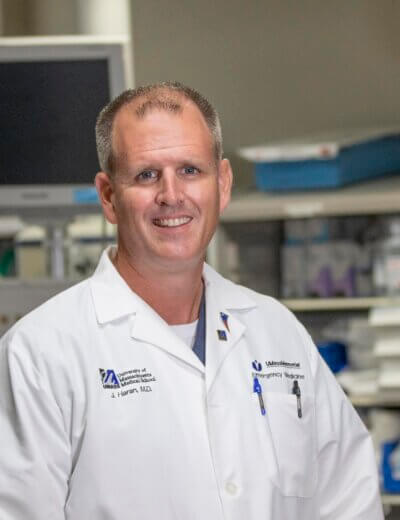
New Microbiome consortium members, Drs. John Haran and Beth McCormick, bring valuable expertise and data from their Gut-brain Alzheimer’s disease Inflammation and Neurocognitive Study (GAINS). This cohort was established in 2020 and follows patients before and through the early stages of Alzheimer’s disease (AD). As part of the study, blood and stool samples are regularly collected from patients, providing valuable microbiome data alongside thorough clinical assessments.
They previously found that the gut microbiome in patients with AD not only influenced inflammation but also contributed to immune dysfunction. While trying to determine the bacterial species driving these changes, they found that the most important factor was what the bacteria produced or did not produce (i.e., the microbiome’s metabolic changes). Early cognitive changes in AD patients were associated with increased levels of bacteria that produce methionine, an essential amino acid. Additionally, this increase was associated with an increase in senescent T-cells. Senescent cells are ‘zombie-like’; they persist and avoid cell death but fail to perform the same functions as healthy cells.
Here, they hypothesize that gut microbiome dysfunction leads to increased methionine production, which triggers a T-cell senescence-associated secretory phenotype (i.e., SASP) that, in turn, increases neuroinflammation and cognitive decline in AD. They will test this hypothesis through two aims. In the first, they will determine the long-term changes and dynamics associated with gut microbiome-generated methionine and their impact on T-cell function, cognition, and the accumulation of senescent T cells using patient samples and clinical data from the GAINS cohort. In the second aim, Drs. Haran and McCormick will introduce specific methionine-producing bacterial strains into amyloid mouse models and measure changes in amyloid pathology, immune markers, and cognitive performance based on the level of methionine production of each strain. This aim seeks to definitively demonstrate the role of gut microbiome-produced methionine in the exacerbation of amyloid pathology and cognitive decline by utilizing a more controlled in vivo setting.