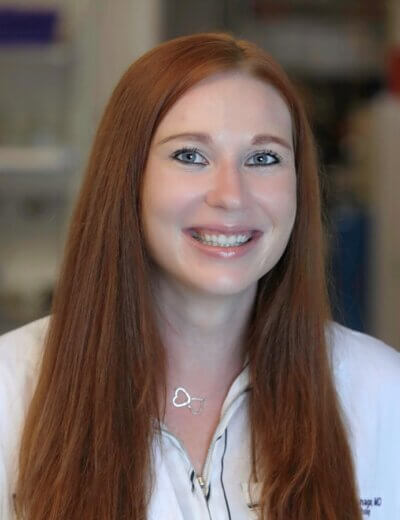
Margaret (Maggie) Flanagan, M.D., is an Associate Professor of Pathology and Laboratory Medicine at The University of Texas Health Science Center at San Antonio (UT Health San Antonio) and holds the Baptist Health Foundation Endowed Chair in Alzheimer’s and Neurodegenerative Disease Research. She is a board-certified neuropathologist and an internationally recognized physician-scientist whose work focuses on the pathophysiological mechanisms underlying Alzheimer’s disease, vascular cognitive impairment, and mixed dementia. Dr. Flanagan leads several major national and international research programs, including directing the Nun Study and co-directing the Honolulu-Asia Aging Study neuropathology initiative. She also leads the Neuropathology Core for the South Texas Alzheimer’s Disease Research Center and serves on the national steering committee for ADRC Neuropathology Cores. Her research integrates digital pathology, spatial proteomics, and multi-omics approaches to uncover mechanisms of neurodegeneration, TDP-43/LATE, TMEM106B fibrillization, glial dysfunction, and vascular contributions to cognitive impairment.
Dr. Flanagan currently serves as Co-PI or PI on multiple NIH awards—including an RF1, an R01, a U24 for federated digital pathology, and recently completed her K08 Physician Scientist Training award—and has active partnerships with CurePSP, philanthropic foundations, and international collaborators. She is also the architect of a national digital neuropathology data-sharing platform designed to integrate human postmortem brain data across Alzheimer’s and related dementias.
Her clinical leadership includes directing a CLIA-certified neurodiagnostic laboratory and developing modernized, cost-efficient brain autopsy and tissue banking protocols aligned with NIA-AA standards. She is committed to translating scientific discovery into meaningful diagnostic and therapeutic advances for patients and families affected by Alzheimer’s disease.
To learn more, visit Dr. Flanagan’s social media page and LinkedIn profile.