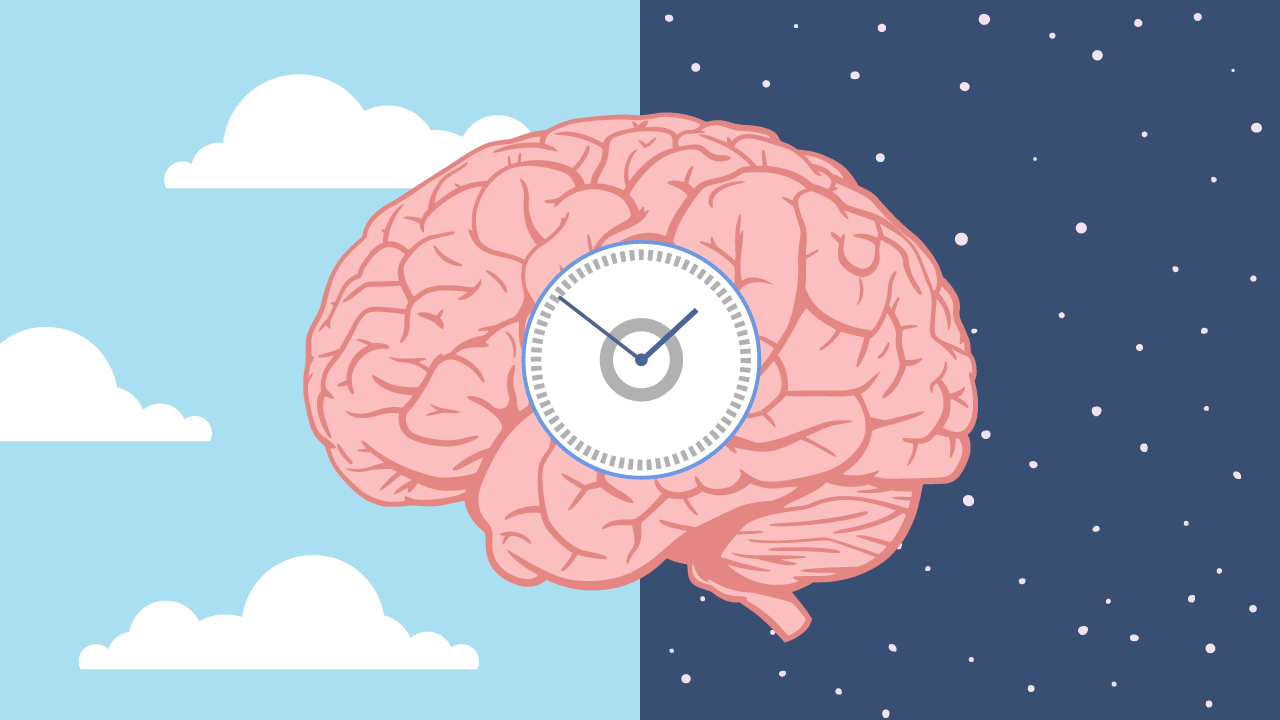
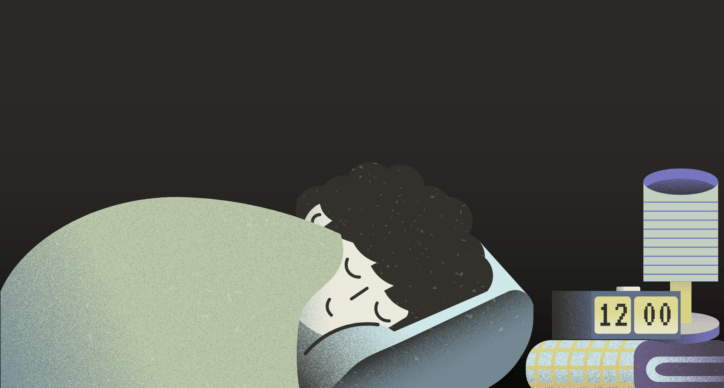
How does your body know when to wake up in the morning or go to sleep at night? You may think you decide by setting an alarm or crawling into bed. While it is true that you have some control over when you start or end your day, there is something much more powerful at play: your body’s circadian rhythms.
Did You Know? The word circadian comes from the Latin words circa diem, which translates to approximately a day.
Circadian rhythms are all of the biological processes that happen internally to keep your body — and each of its cells and systems — on a daily schedule. Sleep is probably the most recognizable behavior associated with this 24-hour cycle, but it is far from the only one. Appetite and alertness rise and fall throughout the day, and even functions like hormone release, body temperature, and blood pressure follow their own daily routines. For our overall health, each rhythm needs to stay on schedule and in sync with the others. When they get out of sync, it can contribute to chronic health problems, cognitive issues, and likely even Alzheimer’s pathology. So, how does the body manage it?
A Body Full of Clocks
Almost every cell in the body has its own clock and can maintain a rough, though not exact, 24-hour schedule without external input. But cells don’t exist in isolation. They’re grouped into tissues and organs alongside thousands of other cells doing the same job. Cells in close proximity influence each other’s timing, pulling their individual clocks into alignment. As a result, instead of thousands of cells in the heart, for example, ticking on slightly different schedules, the whole organ ends up running on a single shared rhythm. This synchronization occurs in other organs as well.
But it is not enough for the heart to have all of its cells’ clocks on the same schedule. The heart’s clock needs to be coordinated with the liver’s clock, and the stomach’s, and every other clock ticking within the body so that the body functions as a whole and stays on the same daily schedule. This coordination is guided by a master clock.
The Conductor and the Orchestra
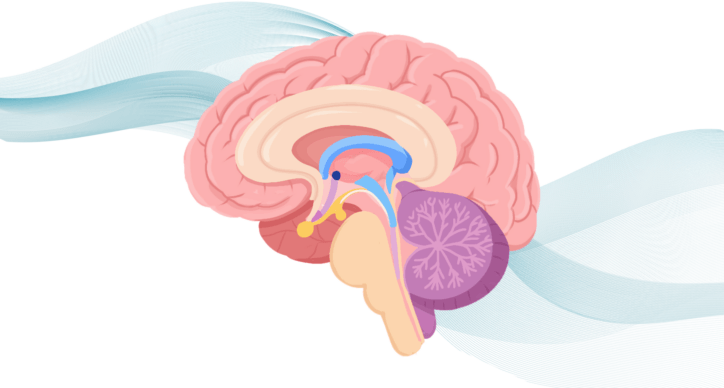
The master clock resides in the brain and consists of two structures called the suprachiasmatic nuclei (SCN). These tiny clocks — smaller than a grain of rice — receive information from the eyes about how bright it is outside and then use the sun’s light and dark cycles to stay on schedule.
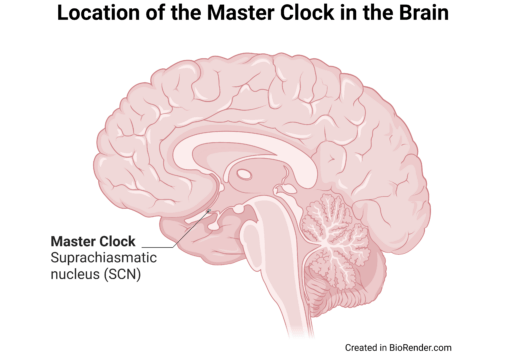
Just like the other clocks in the body, the SCN can keep a somewhat daily cycle on its own. Research has shown that if a person is kept completely in the dark, their circadian rhythms will settle on a daily cycle that is around 24 hours and 11 minutes long. To prevent this slowdown, the SCN takes a cue from an external source — the sun — to reset its own internal clock each morning.
Once it is synchronized to the environment, the master clock acts as a conductor for the orchestra of clocks spread throughout the body.
One way it does this is through its direct connections to the nerves that run the automatic functions of the body, like heart rate and digestion. Not only does the master clock provide information about what time of day it is to the organs that regulate these involuntary processes, but it prepares them to respond to signals at the right time of day.
The master clock also uses hormones as messengers to guide parts of the body it is not directly hardwired to. Once released into the bloodstream, hormones can travel throughout the body, delivering messages about what time of day it is and how the body should respond.
Through these signals, the master clock guides all the different orchestra clocks to play in harmony.
The Harmony of Daily Rhythms
These clocks govern our bodies’ daily behaviors and cellular processes, known as circadian rhythms.
In the early morning, the master clock triggers the adrenal glands to release cortisol to signal that it is time to wake up. Body temperature, heart rate, and blood pressure all begin to rise to prepare the body for the day’s activities. Many people experience peak cognitive performance in the late morning, while physical performance may peak in the late afternoon or early evening when muscular strength and cardiovascular efficiency are high, and reaction times are fastest. As the sun sets, the master clock stimulates the pineal gland to release melatonin to promote sleepiness and prepare the body for night.
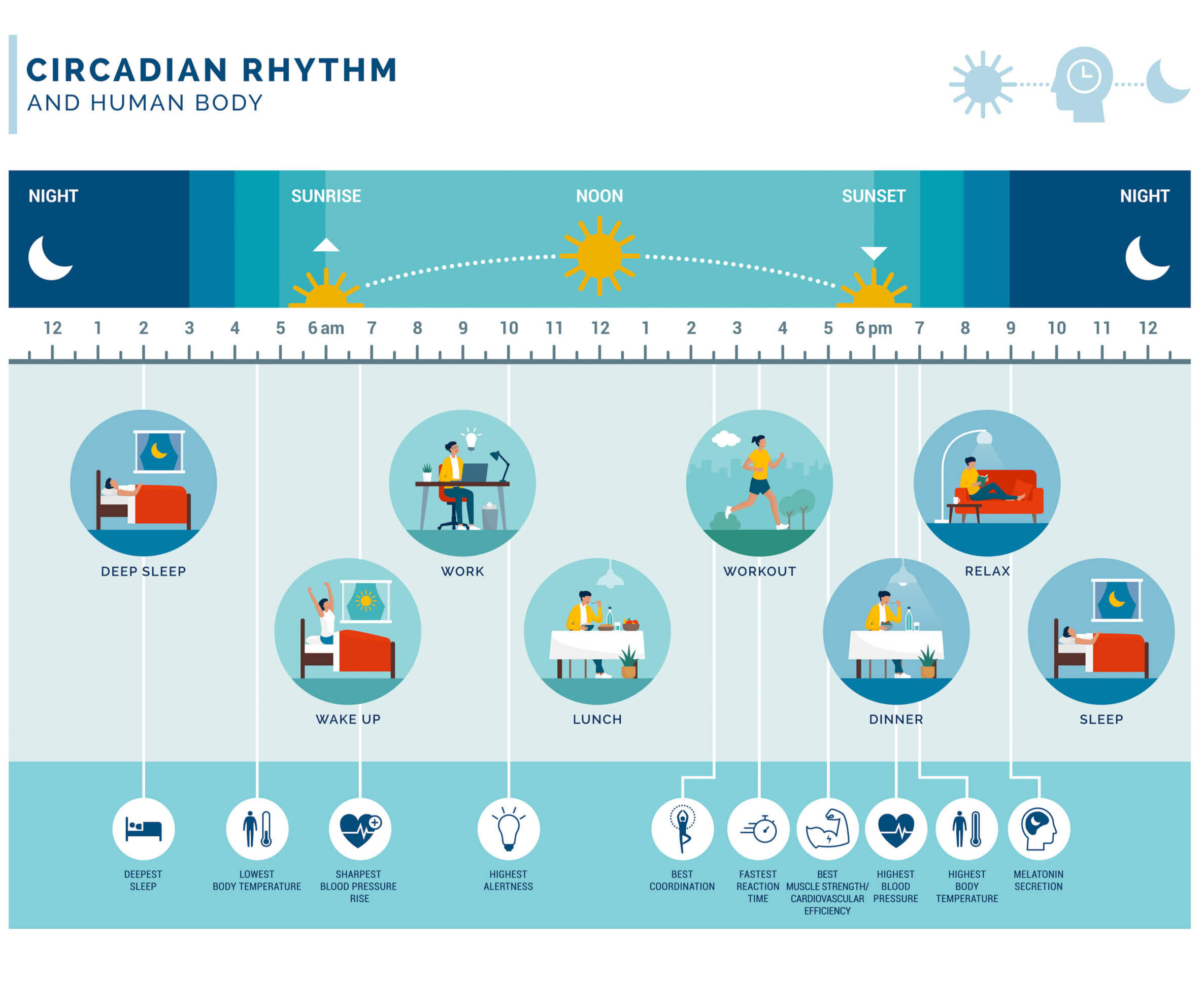 Healthy adults typically follow the same overall pattern, or order, of these daily rhythms. However, age, genetics, and environment can shift the timing of when these patterns begin or end.
When the Orchestra Plays Out of Sync
The culmination of these daily rhythms is a body that is in sync with itself and the environment. The daily cellular processes needed for overall health happen at the right time and in partnership with each other.
We may recognize circadian rhythms by the behaviors and processes they influence, but they begin at the level of an individual cell. Each cell’s clock must work properly and be in sync with its neighbors. Neighboring cells build into tissues and organs that work together, then into systems that coordinate their actions, and finally into the body functioning in concert as a whole. Circadian rhythms are the result of the complex and delicate balance of all these things going well.
But — the orchestra can fall out of sync.
Jet lag is one example of this. When we travel across time zones, the master clock registers that the day-night cycle has shifted and immediately sends signals to the other clocks to put them on a new schedule. But the other clocks can’t shift instantaneously or simultaneously, and this affects how we feel and behave. Our sleep schedule and digestion are off, and we may experience brain fog or headaches. It takes time for our internal clocks to reset and coordinate.
Disruptions can also occur if one section of the orchestra begins to drift off tempo despite the conductor’s consistent timing. This can happen if you miss a night’s sleep, eat too late, use screens at night, or do night shift work. Although light sets the master clock, circadian rhythms are also influenced by eating, physical activity, and choosing to ignore the signals the body is sending.
Circadian rhythm disruptions are linked to depression, diabetes, weight gain, gut issues, and a weakening of the immune system. They are also associated with brain diseases.
Circadian Rhythms and Alzheimer’s Disease
Circadian rhythm dysfunction is common in Alzheimer’s disease, and the most obvious symptom is sleeping problems. About 45% of Alzheimer’s patients suffer from some form of sleep disruption, and often, these problems first appeared before they were diagnosed with the disease.
It is not currently clear whether disruptions in sleep and circadian rhythms precede the brain changes (amyloid plaques and tau tangles) associated with Alzheimer’s or are a result of those changes — or perhaps both.
Scientists supported through the Cure Alzheimer’s Fund® Sleep & Circadian Rhythms Consortium are currently untangling these relationships and investigating how supporting and strengthening circadian rhythms and sleep can improve brain health.
Regardless of which comes first — disease-related brain changes or circadian rhythm disruptions — as the disease progresses, it damages the master clock and the light-sensitive cells needed to reset the clock each day. As sleep problems get worse, they create a negative feedback loop, where brain changes worsen circadian rhythm disruptions, and circadian rhythm disruptions accelerate disease progression.
Keeping Time
When the timing of our body’s orchestra and daily rhythms holds, we barely notice it. When it falters, whether from jet lag, shift work, or a disease like Alzheimer’s, nearly every aspect of our health is affected.
The interconnectedness between our health and circadian rhythm is why researchers are studying ways to strengthen and support circadian rhythms. Protecting the orchestra’s harmony may turn out to be one of the ways we can protect the brain from Alzheimer’s disease.
CureAlz provides medical and scientific information for general educational purposes only and does not endorse or recommend any specific diagnostic tool, physician, clinical trial, or treatment. Because the field is changing rapidly, the information provided may not be fully current. Please partner with your doctor or other qualified medical professional to determine the best medical and health options for your personal medical situation.