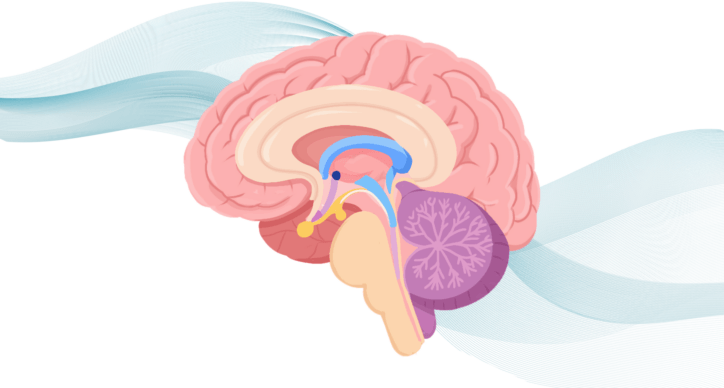
Sleep isn’t like a light switch that turns off the brain at night. The stages of sleep are all very active, with different sequences and roles. They range from clearing out waste to processing and regulating emotions, dreaming, and strengthening memory circuits. And not getting enough sleep has a negative impact on all of these functions.
Unfortunately, too little sleep is the norm for the majority of adults in the United States: a National Sleep Foundation (NSF) survey found that six out of 10 adults don’t log enough hours asleep. For adults between the ages of 18 and 64 years old, NSF recommends seven to nine hours a night; for adults over 65 years old, the recommendation is seven to eight hours.
Scientists now know that sleep — and the internal body clocks that control it — affect brain health and influence the risk of Alzheimer’s disease. Scientists are studying whether disturbances in sleep and our internal clocks (circadian rhythms) can serve as early warning signs for the disease and whether improving our sleep or correcting our internal clocks can prevent or treat the disease.
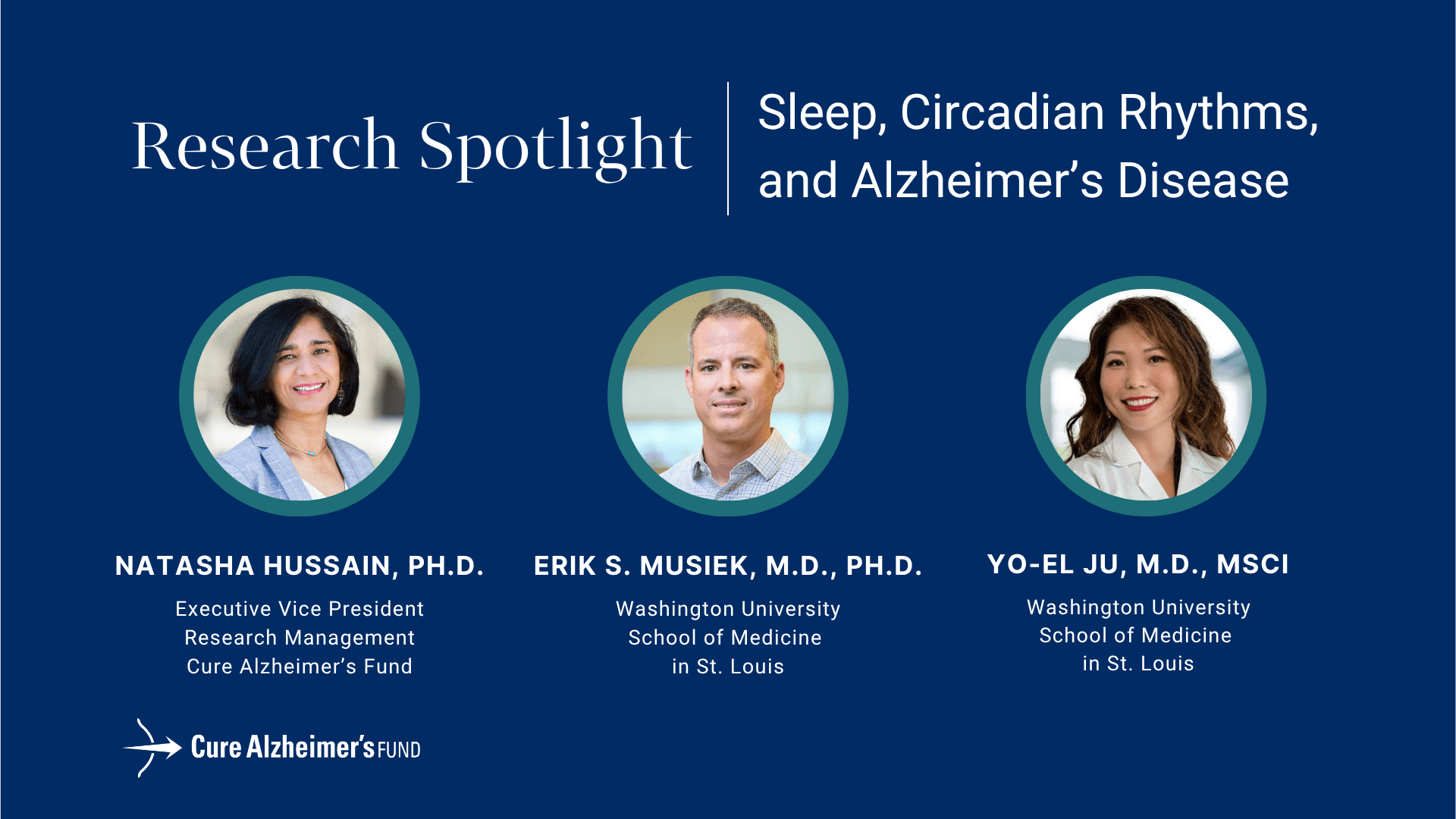
Drs. Erik Musiek and Yo-El Ju of Washington University School of Medicine in St. Louis — both members of the CureAlz® Sleep & Circadian Rhythms Consortium — recently discussed the topic during a webinar about the latest research.
Watch the webinar with Drs. Musiek and Ju moderated by CureAlz EVP of Research Management Natasha Hussain, PhD.
The effects of sleep deprivation and interrupted sleep on the brain
Consistent sleep deprivation has wide-ranging — and often unexpected — impacts on holistic health. Sleep deprivation can mean too few hours of sleep, or sleep that is interrupted too often.
According to Johns Hopkins Medicine, not getting enough sleep increases risk for worse mental function, including depression, irritability, anxiety, forgetfulness, and fuzzy thinking. While many of those effects may seem obvious to anyone who’s experienced a few bad nights, additional potential consequences may not be apparent immediately. They include increased risks for colorectal cancer, heart disease, high blood pressure, and diabetes, alongside cravings for sweet, salty, and savory foods that can drive a 50 percent higher risk for obesity.
Then, there are the effects on the biology of the brain. Johns Hopkins reports sleep deprivation can increase dementia risk by a third and age the brain three to five years along the way.
During CureAlz’s webinar, Dr. Ju described an experiment in which her team disrupted participants’ slow-wave sleep, the deepest and most restorative stage of non-rapid eye movement sleep. The team observed that participants’ levels of beta amyloid, a protein involved in Alzheimer’s disease, were higher during a night of disrupted sleep compared to a different night of uninterrupted slow-wave sleep. To Dr. Ju, those findings suggest that if someone has disrupted slow-wave sleep over a long period, they might develop higher levels of beta amyloid.
Dr. Musiek reinforced this potential connection between sleep quality and Alzheimer’s pathology, mentioning a Washington University study that showed that after people are kept awake for a full night, they have more beta amyloid and tau protein — which can accumulate as tangles in Alzheimer’s disease — in their spinal fluid.
“One of the main mechanisms that links disrupted sleep and circadian rhythm to Alzheimer’s disease is this idea that these abnormal proteins are collecting in the brain, both when we’re not sleeping at all or when our sleep is mistimed,” Dr. Musiek adds.
Best practices for better sleep
Given the importance of sleep for brain health and overall well-being, not to mention its likely ties to the development of Alzheimer’s, both doctors reinforced the national recommendation of seven to nine hours a night.
For those who find that number elusive, here are a few tips from the NSF that may help improve their sleep habits and get a better night’s rest.
- Stick to the same times for waking up and going to bed. A consistent sleep schedule helps regulate your body’s internal clock, which can make it easier to fall and stay asleep.
- Seek sunlight and physical activity during the day. Sunlight represents one of the key drivers of circadian rhythms and can encourage quality sleep. Dr. Musiek encourages getting daylight exposure in the morning or midday — the brighter, the better. Regular exercise can also help promote better sleep.
- Cut down on eating, drinking, and smoking in the afternoons and evenings. Try to avoid any stimulant, like caffeine or nicotine, later in the day. Alcohol consumption can also disrupt sleep, so it may be worth moderating or avoiding drinking several hours before bedtime. Food also sets the circadian clock, so Dr. Musiek suggests avoiding late night meals.
- Put down the phone at least 30 minutes before bedtime. Or turn off the TV, or step away from the computer. Dr. Musiek mentioned during the webinar that the eye has special receptors that project to the circadian system; these sense blue light from these devices and can reset the body’s internal clock. He mentioned that in centuries past, before electricity, people didn’t report disrupted sleep as often as they do now. “In olden times, people read by candlelight,” he says. “It’s a nice yellow-reddish color and doesn’t activate your circadian system as much.”
- Find a relaxing routine and optimize sleep environments. “It’s very hard for busy people who are on the go to just fall into bed and fall asleep,” Dr. Ju says. “People should give themselves time to unwind.” That routine can include personal care, relaxation techniques, and dimmed lights. Blocking out light, using a quality mattress and pillow, and setting a cool yet comfortable temperature can also help.
Missing one night of sleep won’t suddenly put someone at risk for long-term health consequences. But, like all healthy habits, quality sleep builds over time, and prioritizing it supports brain health and may reduce the risk for Alzheimer’s.
To learn more about the connections between sleep, brain health, and Alzheimer’s, click here. You can also support our work to advance Alzheimer’s research by clicking here.
Take a closer look at what happens when we sleep, why sleep matters, and how our sleep habits can affect our health. Read more.
CureAlz provides medical and scientific information for general educational purposes only and does not endorse or recommend any specific diagnostic tool, physician, clinical trial, or treatment. Because the field is changing rapidly, the information provided may not be fully current. Please partner with your doctor or other qualified medical professional to determine the best medical and health options for your personal medical situation.