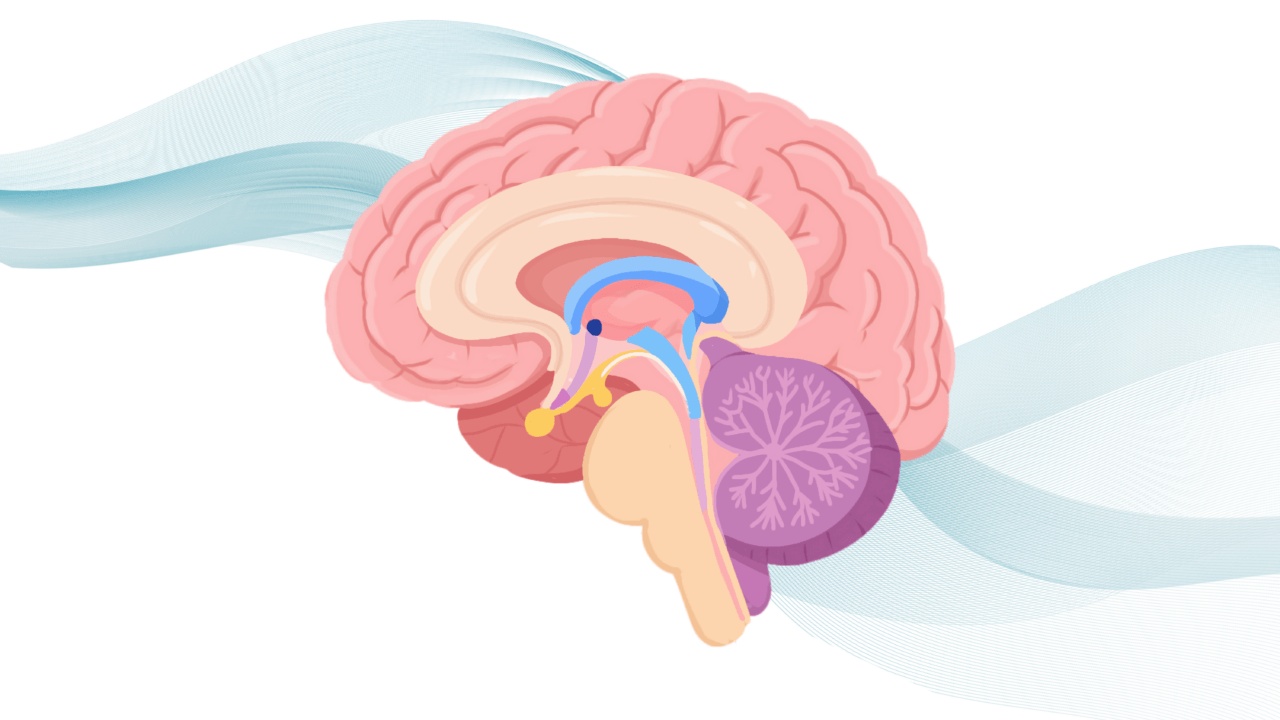
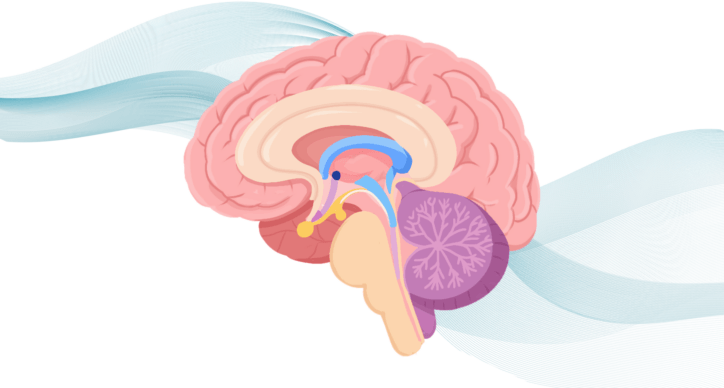
An adult human brain weighs roughly three pounds, about the same as a large cantaloupe. Yet, despite its relatively small size, it uses a massive 20% of the body’s total energy — more than any other organ. As the body’s command center, it uses this energy to carry out the body’s many functions, but in doing so, it generates waste.
To clear that waste away, the brain has its own washing machine, called the glymphatic system, which works best when we are asleep. This system is so important for brain health that, when it breaks down, it can significantly increase the risk for and accelerate the progression of brain disorders such as Alzheimer’s disease.
What is the Glymphatic System?
In essence, the glymphatic system is a mechanism that brings clean fluid into the brain to “wash it,” and then carries the waste-laden fluid out of the brain to dispose of it. But, as simple as this process sounds, less than 15 years ago, it was a mystery to scientists.
The brain is thought of as a nearly impenetrable fortress. It is surrounded by three protective layers and has heavily guarded borders. These safeguards protect the brain by restricting what can get in. They also restrict what gets out, including waste, which would seem to create a sanitation problem. Yet the brain is not drowning in its own waste. How is that possible?
In the rest of the body, sewage pipes (or lymphatic vessels) shadow blood vessels. After tissues use the oxygen and nutrients supplied by the blood, the lymphatic vessels help carry away the waste. The brain lacks this network of sewage pipes, and because of how well it is isolated, it also cannot tap into the body’s sanitation system. Therefore, the brain must have its own unique way to deal with waste. The challenge for scientists was figuring out how.
In 2012, a team led by CureAlz®-funded neuroscientist
Maiken Nedergaard, MD, DMSc, discovered the
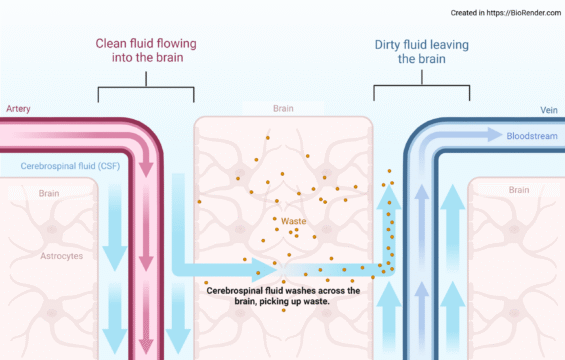
answer. Rather than being shadowed by lymphatic vessels, the brain’s blood vessels are surrounded by fluid-filled tubes created by brain cells called astrocytes. Astrocytes are star-shaped glial cells that support, nurture, and protect neurons. When astrocytes are near blood vessels, the tips of their arms form broad, paddle-like structures called endfeet, which they use as tiles to enclose blood vessels. Since they do not physically touch the blood vessels, they create a pipe.
Did You Know? The word glymphatic comes from adding a “g” for glia, as a nod to the role astrocytes play, to “lymphatic” to signal its waste-clearance role.
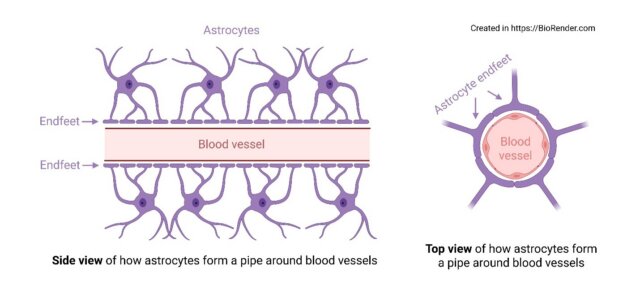 These are the washing machine’s pipes, and flowing inside them is cerebrospinal fluid.
Cerebrospinal fluid is the liquid the brain floats in. It wraps the brain in a safe cushion and acts as a shock absorber. It also delivers nutrients and carries away waste, but because it doesn’t penetrate the brain’s deep spaces, it must travel from the surface of the brain to inside the brain, and the washing machine’s pipes are how it gets there.
Clean cerebrospinal fluid follows arteries — blood vessels carrying oxygen- and nutrient-rich blood — into the brain. Once inside, the fluid exits the pipe and enters the brain tissue either through tiny gaps between the endfeet or by moving through the endfeet via water channels that span them. It then washes across the brain, dropping off nutrients and picking up waste and debris on its way to the pipes surrounding veins. The cerebrospinal fluid, now “dirty” with waste and debris, then follows the veins to the brain’s surface.
The discovery of the glymphatic system explains how the brain is washed, but it does not explain what happens to the waste once it reaches the brain’s surface. Remember, the brain is surrounded by protective layers that separate it and the cerebrospinal fluid from the rest of the body and prevent access to the body’s sanitation system. So, where does the brain’s waste go?
Resolving the Sanitation Mystery
It turns out that more than one exit route exists, and scientists are still mapping how much each contributes to waste removal.
In 2015, a team led by Jonathan Kipnis, PhD, now a CureAlz-funded researcher and chair of the Brain Entry & Exit Consortium, discovered lymphatic vessels in the brain’s outermost protective layer, the dura mater. These vessels provide direct access to the body’s sanitation system. However, there was a small problem. A protective layer just beneath the dura blocked waste from reaching the vessels. It wasn’t until 2024 that Dr. Kipnis’s lab, with CureAlz support, discovered how waste got through.
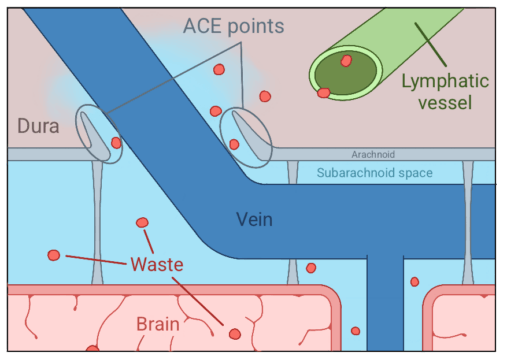
The layer creating the roadblock is the arachnoid mater. It keeps cerebrospinal fluid encased around the brain. “Dirty” cerebrospinal fluid that drains from the brain via the glymphatic system gets dumped into this space.
Although the pipes carrying the dirty fluid end at the brain’s surface, the veins at the center of the tube continue and pass through the arachnoid layer into the dura. Small gaps, called arachnoid cuff exit/entrance (ACE) points, are created in the arachnoid layer as the veins pass through. These points allow dirty cerebrospinal fluid to enter the dura, where it drains into the lymphatic vessels, travels to the lymph nodes in the neck, and is handled by the body’s sanitation system.
Dirty cerebrospinal fluid can also flow alongside the nerves as they exit the skull or spinal column. Once the nerves are outside the protective barriers, the fluid can reach the lymphatic vessels in surrounding tissues.
Finally, some waste bypasses the lymphatic system entirely and goes directly into the blood. This happens either at the dural sinuses or the blood-brain barrier. Dural sinuses are blood-filled channels that drain blood from the brain. Small protrusions of the arachnoid layer, called arachnoid granulations, poke through the dura and drain dirty cerebrospinal fluid directly into the sinuses. At the blood-brain barrier, waste like amyloid beta and tau is transported across the barrier and carried away by the blood. Until the glymphatic system and lymphatic vessels in the dura were discovered, these methods were thought to be the main pathways for waste to exit the brain.
How Does Sleep Affect the Glymphatic System?
The brain’s washing machine is always on, but it is most active and effective during sleep. When we’re awake, our brain is busy handling all the activities needed to get us through the day.
During sleep, the brain can devote more of its activity to housekeeping. This cleaning is most active during deep, non-rapid eye movement (NREM) sleep.
During this stage, two things happen:
- The spaces between and around neurons get bigger, making it easier for the cerebrospinal fluid to pick up waste and carry it away.
- More fluid is pumped through the washing machine, giving the brain a deeper and more thorough cleaning.
Most of what we know about the connection between sleep and the glymphatic system comes from animal models, but human studies appear to support these findings. However, this is still a relatively new field that is constantly evolving as scientists learn more.
What is the Connection Between the Glymphatic System and Alzheimer’s Disease?
Misfolded clumps of amyloid beta and tau protein are the hallmark pathologies of Alzheimer’s disease. The glymphatic system clears these proteins from the brain during deep NREM sleep. This cleaning is important for brain health, especially in Alzheimer’s and other brain diseases, where protein buildup becomes a problem.
But as we age, sleep quality declines, and we spend less time in NREM sleep. We also produce more amyloid beta proteins, and our cells become less efficient at recycling misfolded proteins and other debris. Together, these changes create an environment where waste clearance is affected.
One of the earliest symptoms seen in Alzheimer’s is trouble sleeping, and it often appears before memory problems. As amyloid beta and tau accumulate, they damage the brain regions that control sleep, making good sleep even harder to get. This creates a negative cycle: rising waste levels interfere with sleep, and disrupted sleep interferes with waste removal.
This damaging cycle shows up anatomically, too. In Alzheimer’s disease, there is evidence that amyloid clogs ACE points, the small passageways in the arachnoid layer that lead to the body’s sanitation system, blocking one of the main pathways for waste to leave the brain. This leaves more amyloid to accumulate, which results in more clogged ACE points.
Age also wears out the washing machine and the pipes carrying waste out of the brain; both become sluggish and less efficient.
The links between sleep, the glymphatic system, and Alzheimer’s disease suggest that therapies aimed at improving sleep quality and enhancing the efficiency of the washing machine could someday prevent Alzheimer’s or slow its progression.
Protect Your Rest
A clean brain is a healthy brain. The best way to ensure your brain gets the thorough washing it needs each night is to take meaningful steps to support healthy sleep. This can include keeping a consistent nightly routine, avoiding screens late at night, and talking to your healthcare provider if you are struggling to get enough high-quality sleep.
Sleep is something we can improve. In the fight against Alzheimer’s, supporting healthy sleep is one step we can take to help protect the brain.
To learn more, watch the CureAlz webinar “Sleep, Circadian Rhythms, and Alzheimer’s disease” to hear how sleep affects amyloid and tau, what “good sleep” looks like, and practical steps you can take today.
Explore Sleep and Alzheimer’s Research
Learn more about the connections between sleep, brain health, and Alzheimer’s disease — and how CureAlz-funded researchers are working to better understand them.
CureAlz provides medical and scientific information for general educational purposes only and does not endorse or recommend any specific diagnostic tool, physician, clinical trial, or treatment. Because the field is changing rapidly, the information provided may not be fully current. Please partner with your doctor or other qualified medical professional to determine the best medical and health options for your personal medical situation.