When you recall a memory, what’s actually happening in your brain? Are you retrieving a file from a cerebral file cabinet? Watching a replay on a mental big screen? Neither, it turns out. Memories leave a physical trace in the brain that scientists call an engram. But your brain isn’t replaying those traces when you remember. It’s rebuilding the memory, piece by piece, every single time.
The Making of an Engram
When we experience something, cells scattered across our brain are activated to process what is happening.
Let’s imagine a birthday party. The sight of your friends, decorations, and presents lights up the cells in the visual cortex. Hearing the sounds of music and people chatting activates cells in the auditory cortex. The smell of cake stimulates the olfactory cortex, and feelings of happiness activate cells in the brain’s emotional center. The firing of these cells creates a physical trace of the experience, called an engram, which forms the foundation of a memory.
The Role of the Hippocampus
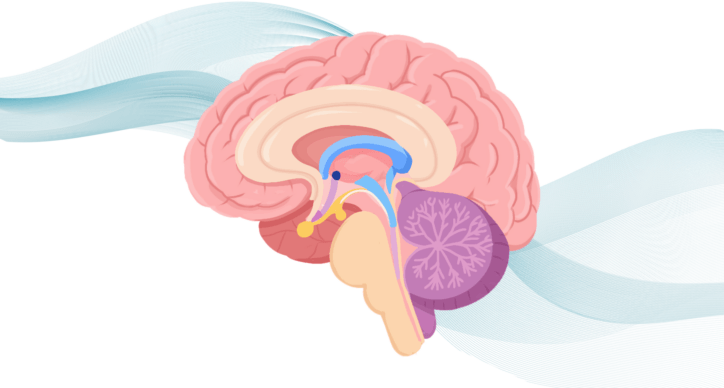
The hippocampus, a brain region important for the next steps in memory formation, binds the engram—sights, sounds, smells, and emotions—into a single, unified memory. This ensures that the memories of your best friend flying in from Maine to surprise you, the taste of chocolate cake, the gag gift from Aunt Linda, and the joy you felt are linked as a single memory of your 35th birthday.
But this memory is fragile and temporary.
To stabilize the memory and move it into long-term storage, the hippocampus consolidates it. Sleep is important for this process. When we sleep or rest quietly, the brain “replays” the experience, causing the same cells that fired during the original experience to fire again. Recalling the memory while awake also helps consolidation.
Each time the memory is replayed or recalled, new connections form between the firing neurons, and any existing connections grow stronger. The act of making memories physically changes the shape of the cells involved and their connections.
Consolidation of a memory and its movement to long-term storage can take hours to even years. As the memory stabilizes, the hippocampus plays less of a role in retrieving it, and the brain’s outer layer, called the neocortex, takes over.
Memories and Alzheimer’s Disease
In Alzheimer’s disease, the hippocampus is affected early, which explains why memory issues are one of the first symptoms. When cells in the hippocampus are damaged or die, the important first steps in forming a memory can’t occur, and fragile, temporary memories can’t be consolidated or retrieved. It explains why people with Alzheimer’s can initially remember childhood memories, but not what happened a few moments ago. Long-term memories no longer need the hippocampus for retrieval, so a person with the disease can still access those memories. But, as the disease spreads to other regions of the brain, including the neocortex, even their longest-held memories disappear.
The Dynamic Act of Remembering
Memories are the result of the brain rewiring and reshaping itself. They are not snapshots or snippets of moments. Instead, their creation is the result of tremendous effort by the brain, and their recollection is a dynamic act of reconstruction.
And all so you can relive the taste of cake, the laughs from a gag gift, and good times with your friend from Maine.